Fifty years ago, we lived in a very different Australia. In 1976 you could smoke in hospital wards, and cigarette advertisements filled our TV screens. Children could travel in cars on the lap of their parents. ABBA topped the music charts (good times!); Malcolm Fraser had just become Prime Minister; and mental health was something most families simply didn’t talk about.
If someone in your family was experiencing a mental health challenge, the expectation was often that you would quietly get on with it. There was no language around ‘mental health carers’. In fact, the term ‘carer’ wasn’t really used at all. You were a wife, a husband, a parent, a sibling or a friend, doing what families were expected to do.
The Australia we know today, and our understanding of mental health in particular, is quite different. But while we’ve made enormous progress, I believe we’ve overlooked one of the most important parts of the mental health system: the unpaid carers who hold it all together.
Fifty years ago, Australia was in the early stages of deinstitutionalising mental health care. Across the country, large psychiatric hospitals were beginning to close or reduce in size as treatment shifted into the community. It was an important and necessary reform. People deserved to live with dignity, connection and independence wherever possible.
But care didn’t disappear. It simply moved home.
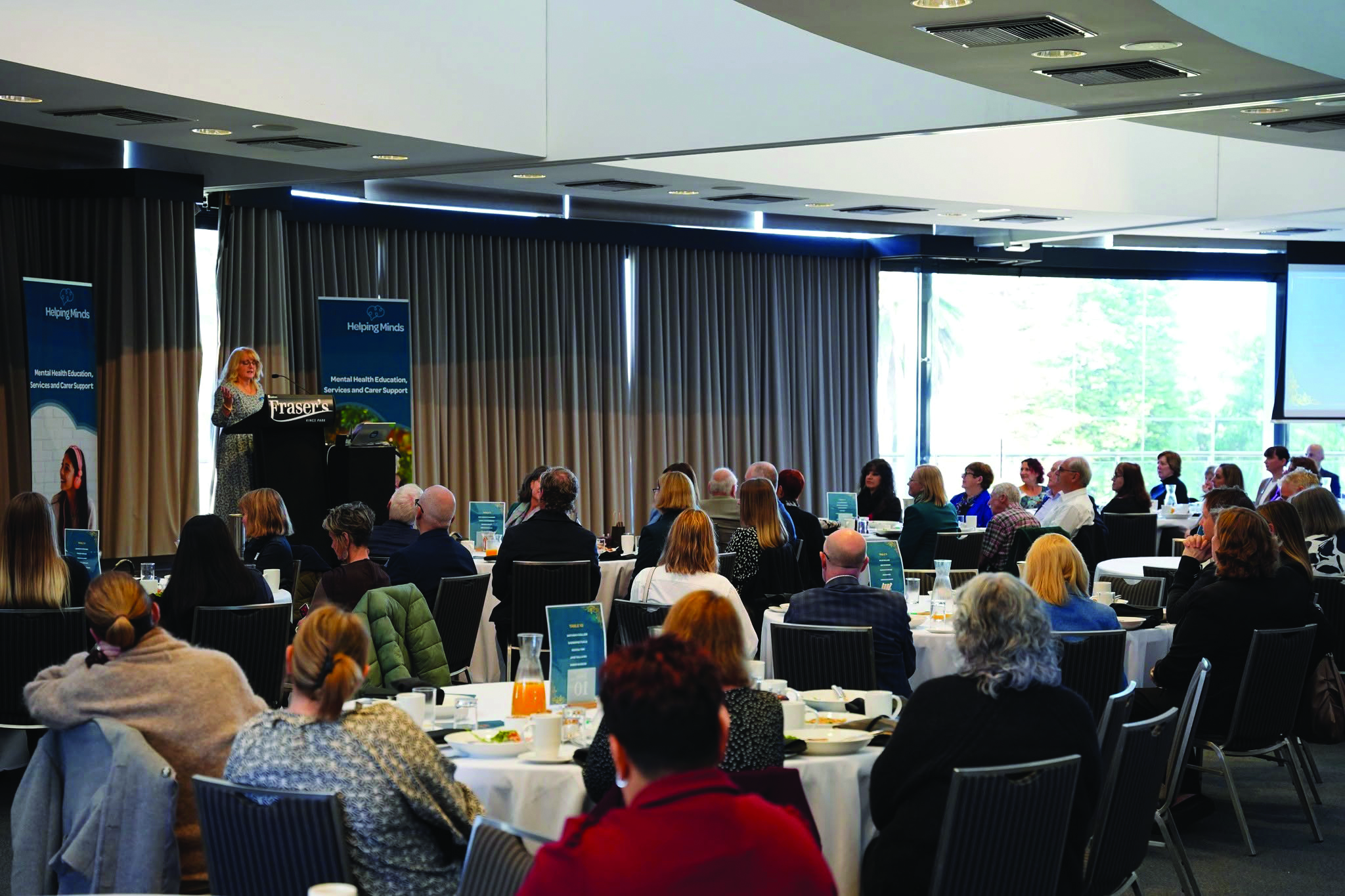
The 50th anniversary celebration of Helping Minds.
Parents became advocates. Partners became coordinators. Siblings became crisis responders. Friends became the people answering the phone at midnight. Families found themselves navigating appointments, medications, housing, employment, and the emotional uncertainty that so often accompanies mental ill health.
Most had no training. Respite was scarce. Counselling for carers was uncommon. There was little formal recognition from the health system that carers needed support too.
And so, the Association for Relatives and Families of the Mentally Ill (ARAFMI) – now Helping Minds – was born in WA, recognising the need for dedicated support for families and friends. Much has improved and changed over the past five decades since our organisation was born.
Today we talk about mental health in our schools, workplaces and communities. We understand recovery is possible. We recognise the value of lived experience. There are dedicated carer supports, respite services, peer networks and education programs that simply didn’t exist when Helping Minds first opened its doors all those years ago.
These changes matter. They have improved lives. Yet, when I speak with carers today, I still hear something remarkably familiar. Many tell me they feel invisible – I imagine as much as the families and friends felt 50 years ago.
They love the person they support, but they are exhausted. They worry constantly. They lose sleep. They juggle work with appointments and crises. Some reduce their hours or leave employment altogether. Many quietly put their own health, relationships and aspirations on hold because someone they love needs them.
We rightly focus on the person experiencing mental distress. They should absolutely remain at the centre of care. But all programs and supports need to be relational by design, as mental health challenges rarely affect just one person.
Its impact ripples through families, friendships, workplaces and communities. Every diagnosis, every relapse and every recovery journey touches the lives of others who are often providing extraordinary practical and emotional support behind the scenes.
These carers are not an optional extra to Australia’s mental health system. They are part of its foundation. Yet, too often, carers remain invisible in conversations about public health reform.