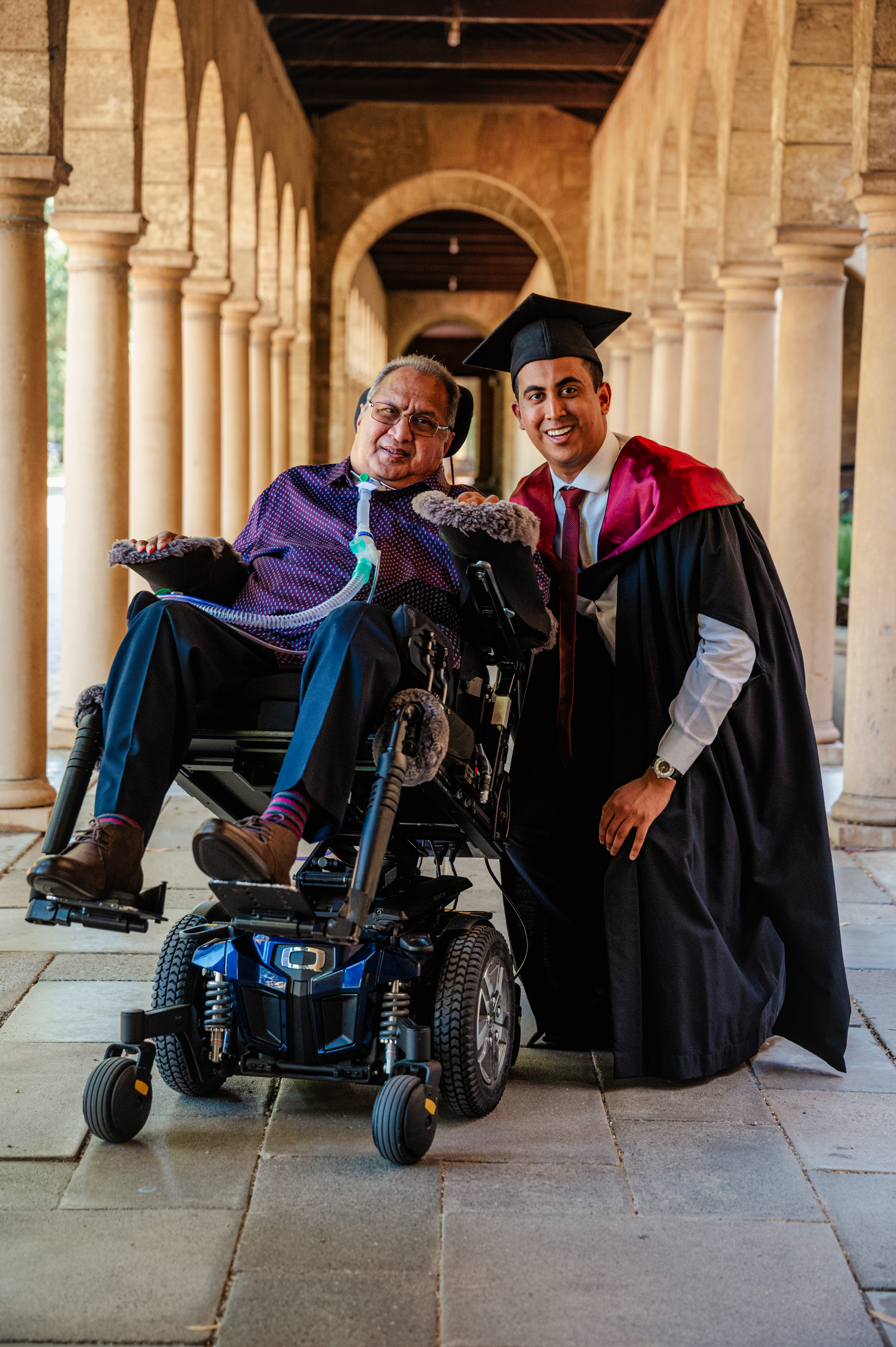
For Jason, getting into medicine in the same year as experiencing the impact of his dad’s intensive medical treatment was “very weird”.
“Honestly, I’ve been very fortunate that no one else in my family had been unwell prior to this. As my dad was in ICU for so long, we were visiting every day, and it had kind of became a new normal for us. You just get used to that kind of environment.
“Looking back, I don’t think I had a good appreciation of what it meant to be a doctor or to really care for people before Dad’s accident. That experience gave me a much greater understanding of the realities of medicine.”
Jason, an AMA (WA) member, graduated from UWA at the end of 2023 and started his internship at RPH in 2024. In his first year, he did a term in the Spinal Unit, working with Orthopaedic Spinal Surgeon Mr Farhaan Altaf, the specialist who had looked after his father in hospital.
“Since getting into medicine, I’d always wanted to do a spinal term just to see more spinal cord injuries and the treatment of them. Not to face my fears or relive my experience with Dad – but just to experience it again and see what it was like from the other side,” he says.
It was Mr Altaf who suggested Jason undertake a research project looking at the spinal management and outcomes of patients with central cord syndrome. Mr Altaf supervised the research.
“There’s a bit of controversy about how central cord syndrome should be managed,” Jason says.
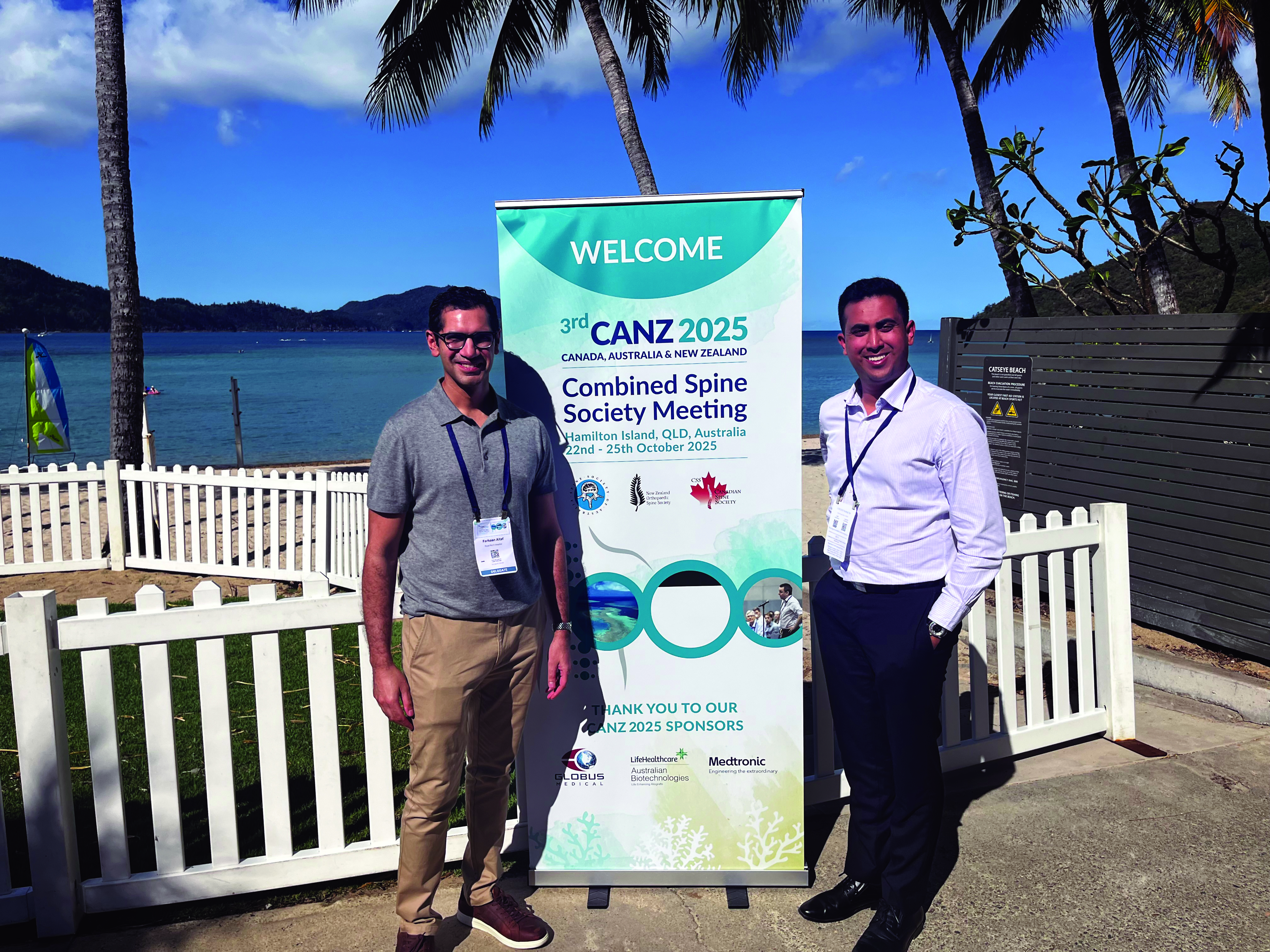
Jason with Orthopaedic Spinal Surgeon Mr Farhaan Altaf
at the CANZ Spine Society Meeting (Queensland, 2025).
“What’s really promising about this type of injury is that there’s usually some recovery, or more recovery compared to other types of spinal cord injuries. This type of injury usually presents differently as well. Patients generally have greater upper limb weakness compared to their lower limbs. Most spinal cord injuries are the opposite.”
Jason’s five-year retrospective cohort study at RPH won the Rob Johnston Award for the best paper presented by a surgical trainee at the Spine Society of Australia’s annual scientific meeting in Perth last year. As the winner, Jason was then invited to present his paper again at the third CANZ (Canada, Australia, New Zealand) Combined Spinal Society meeting in Queensland last October.
“Usually, this award is for doctors more experienced than I was, so being able to win it was a nice surprise,” Jason says.
Now in his third year as a junior doctor at RPH, Jason is still undecided about his future career path, except that he knows it will definitely be in a hospital.
“I always had an interest in spinal surgery after Dad’s injury,” he says.
“But I also have an interest in intensive care, because the team at RPH did such an amazing job with Dad as well.
“Part of me really enjoys spinal surgery and Orthopaedics, but I’ve always also enjoyed critical care in the ICU, and that’s more related to my undergrad degree. I’m still trying to figure it out, to be honest.”
Joslyn D’Silva has now been back home for six years. He is a quadriplegic and permanently on a ventilator, with 24-hour care provided under the National Disability Insurance Scheme.
Despite not being able to move his arms or legs, Joslyn has experienced significant improvement in his quality of life over the years. He has gone from not being able to speak, eat or drink, to now being able to go out for dinner with family and friends, play sudoku, and watch the West Coast Eagles at the stadium with his sons.
“The one thing that amazes me about my dad is that he’s never really complained about anything,” Jason says.
“Even before the accident, he was a very content and humble person… he’s always been patient with others, and he’s grateful every day for life at home with his family.