Archives

  • April 2026
  • March 2026
  • February 2026
  • January 2026
  • December 2025
  • November 2025
  • October 2025
  • September 2025
  • August 2025
  • July 2025
  • June 2025
  • May 2025
  • April 2025
  • March 2025
  • February 2025
  • August 2024
  • July 2024

Categories

  • 2025 MEDICAL CAREERS EXPO
  • 2025 RURAL HEALTH AWARDS
  • 2026 MEDICAL CAREERS EXPO
  • ADVERTORIAL
  • ADVERTORIAL – MDA NATIONAL
  • ADVERTORIAL – NORTH METROPOLITAN HEALTH SERVICE
  • ADVERTORIAL – SILVERCHAIN
  • AGED CARE
  • AMA (WA) PRACTICE GROUPS
  • AMA FINANCIAL SERVICES
  • AMA25 CONFERENCE
  • AMBULANCE RAMPING
  • ANNUAL GENERAL MEETING
  • AUSTRALIA DAY HONOURS
  • AUTHOR INTERVIEW
  • CARE IN ACTION
  • CLASSIFIEDS
  • CLINICAL EDGE
  • COLORECTAL CANCER
  • COMBAT SPORTS
  • COMMENT
  • CONGRATULATIONS
  • COVER STORY
  • COVER STORY – FIRST NATIONS HEALTH
  • COVER STORY – SURGERY & ANAESTHESIA
  • CPD HOME
  • DHASWA
  • DOCTORS IN TRAINING
  • DR YES
  • DRIVE
  • FAMILY LAW
  • FEATURE – DERMATOLOGY
  • FEATURE – OPHTHALMOLOGY
  • FEATURE – PATHOLOGY
  • FEATURE – RESEARCH PROFILE
  • FEATURE – WOMEN & BABIES
  • FROM THE EDITOR
  • GRADUATION CEREMONIES
  • HEALTH INFRASTRUCTURE
  • HEALTH LEADERSHIP
  • HEALTH WATCH
  • HOSPITAL HEALTH CHECK (HHC) 2025
  • IMG DIARY
  • INDUSTRIAL RELATIONS
  • INTERN ORIENTATION WEEK
  • INTERNSHIP
  • MEDBALL25
  • MEDIA MATTERS
  • MEDICO-LEGAL MATTERS
  • MEET THE COUNCILLOR
  • MEMBER BENEFITS
  • MEMBERS SOIREE
  • MENTAL HEALTH FEATURE
  • MINISTER'S MILESTONE
  • NEWS
  • ON THE SHELF
  • ONLINE SAFETY
  • OPINION
  • OPINION – RACGP
  • OUT & ABOUT
  • POLICY
  • POLICY – ERIDEABLES
  • PRACTICE MATTERS
  • PRESIDENT'S DESK
  • PROFESSIONAL NOTICES
  • PROFILE
  • PUBLIC HEALTH – WAAC
  • RESEARCH
  • RURAL PRACTICE
  • SLEEP SURVEY
  • SOCIAL MEDIA LEGISLATION
  • STATE BUDGET 2025-26
  • STUDENT SPEAK
  • THE LAST WORD
  • TRANSPLANT MILESTONE
  • VALE
  • WHAT'S ON
  • WINE

Advertisment

http://Advertisment

Newsletter

  • Current Edition
  • Previous Editions
    • February – March 2026
    • December 2025 – January 2026
    • October – November 2025
    • August – September 2025
    • June – July 2025
    • Older Editions
  • Advertise with us
  • AMA (WA) Homepage
  • Current Edition
  • Previous Editions
    • February – March 2026
    • December 2025 – January 2026
    • October – November 2025
    • August – September 2025
    • June – July 2025
    • Older Editions
  • Advertise with us
  • AMA (WA) Homepage
Back To Home
Previous Post
The AMA (WA) Marketplace
THE LAST WORD

Doctors who train in the bush will stay in the bush

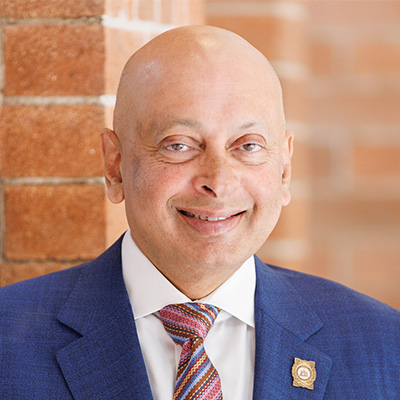
Associate Professor Sanjay Jeganathan

Board director and immediate past President, Council of Presidents of Medical Colleges (CPMC)

Claim EA: Professional Reading CPD hours with AMA CPD Home. Learn more in our helpful article and log your hours.

Rural Australia has only 2.7 doctors per 1,000 people versus 4.3 in the cities, effectively creating a two-tier healthcare system in which the quality of specialist care you receive can be determined by your postcode.

We know that doctors with rural backgrounds or training experience are more likely to take up rural practice. So we developed a guide, in partnership with the National Rural Health Commissioner Professor Jenny May, to embed these factors into the trainee selection process. By adopting this approach, specialist medical colleges are taking practical steps to support the goal of providing equitable access to specialist care in rural and remote communities.

The problem is this initiative is only a partial solution – because if you select those rural trainees but train them in the city, it’s likely they will not return to country practice.

So, during my tenure as president and chair of CPMC, I proposed establishing a dozen or more multi-specialty rural training hubs across regional Australia. The Australian and New Zealand College of Anaesthetists (ANZCA) has pioneered this concept to train anaesthetists in regional Victoria. All other Colleges are keen to be part of the rural-regional training hubs.

By expanding the specialist workforce in regional areas, these hubs could strengthen rural and regional service capacity, improve access, and help reduce out-of-pocket costs for patients. Training in the regions also provides a significant learning opportunity, which should be highlighted and promoted. The concept is simple: recruit in the regions, train in the regions, and specialists will remain in the regions.


“ Training in the regions also provides a significant learning opportunity, and this should be highlighted and promoted. The concept is simple: Recruit in the regions, train in the regions, and specialists will remain in the regions.
This is exactly the scenario that’s playing out in Broome at the Kimberley Centre for Remote Medical Training, established by the University of Notre Dame, that has been delivering a full Doctor of Medicine program since the start of last year. It is WA’s first fully regionally base medical school and offers priority entry pathways to Kimberley and Pilbara residents, Indigenous applicants, and students from rural backgrounds.

The students are based at Notre Dame’s Broome Campus for the first two years of the MD course. In the final two years, they undertake rural and regional clinical placements across the State.

My thinking is that specialist trainees should do 70-80% of their training as a general surgeon, physician, psychiatrist, gynaecologist, radiologist or anaesthetist in the rural-regional training hubs, and then maybe 20-30% in the city. This gives them some exposure to major metropolitan settings and the high- volume work that happens there, as some procedures never happen in a rural context. By supporting them to spend some time in the major metro areas, while being trained primarily in a regional setting, you grow the specialist workforce where it is needed.

We have proposed that the hub network be funded through the regional specialist training program (STP), which has been running for more than a decade and costs the federal government about $200 million a year. The Grattan Institute report last year recommended the funding be doubled to support specialist training in the regions.

Despite its name, the reality is that STP-funded registrars spend most of their time in metropolitan hospitals. This is one of the main reasons why the program has failed to deliver specialist workforce to regional and rural communities. The program is being redesigned, and we are persuading the Government and Federal Health Minister Mark Butler to invest in this rural-regional training hubs program.

We have asked that if CPMC and the Colleges could design a program like that, then trainees should not be restricted by jurisdictional boundaries. So, if there’s a general surgical trainee in Port Hedland, for example, the trainee should be able to move to a rural hospital in North Queensland if they chose this option as part of their training.

Getting such exposure and experience in a variety of rural settings will create a much richer specialist doctor. State governments should join in this effort if we are to succeed in addressing the inequity of health access.

Save the article
Previous Post
The AMA (WA) Marketplace
Medicus
© 2026 Medicus - All Rights Reserved.

Start typing and press Enter to search

UNLOCK FULL ACCESS TO MEDICUS

You're just getting to the good part! Log in to your AMA (WA) member account to continue reading, or join today for full access to exclusive content, member benefits, and more.

Month End Offer is live!

Get up to 40% off on AMAMedius

AMA (WA) MEMBER ONLY ACCESS

Sign in using your membership email and date of birth.

If you are experiencing issues, please contact the AMA (WA) membership team via email membership@amawa.com.au