For a few years now, Australia’s bestselling cars have been 4-wheel-drive, 4-door utes, with Toyota Hilux and Ford Ranger ruling the roost. Except for tradies and mine sites, it can be a bit hard to gauge the appeal.
Generally, they are unsophisticated designs, with a high centre of gravity and poor on-road dynamics. But with the unceasing demand for vehicles of this type and the march of technology, things have been improving.
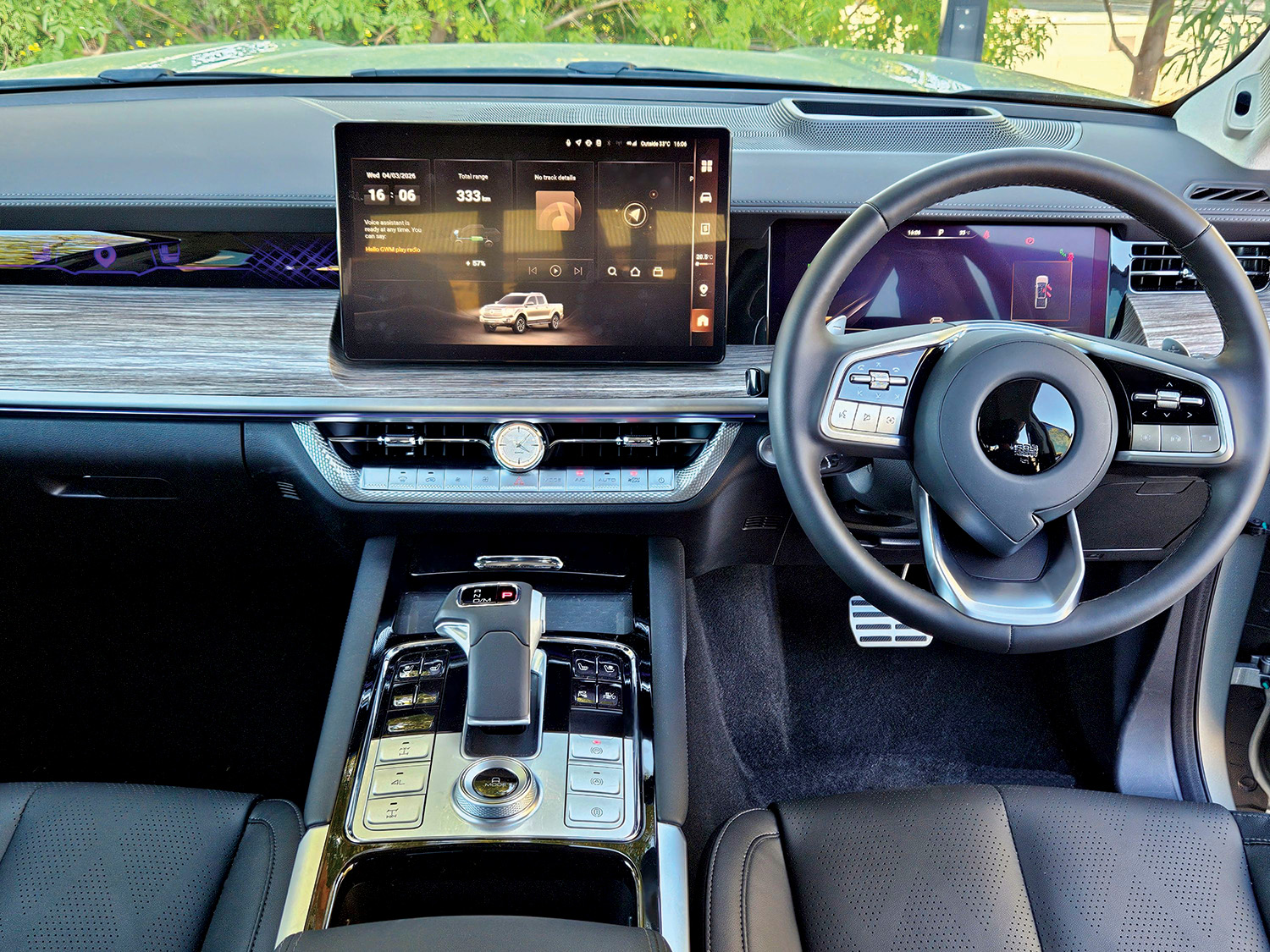
Luxury features include heated and cooled seats, massaging at front seats, a panoramic sunroof, phone charger docks back and front, and more.
And seeing that Aussies love these, several brands have joined the bandwagon – in addition to the abovementioned, plus long-time players Mazda, Mitsubishi, Isuzu and Nissan. Recent to the fray are Kia, Foton, GWM, JAC, KGM, LDV, MG and with a weird model, Deepal – plus a few offering larger dual-cabs.
Most newbies are Chinese-made, from relatively new companies which significantly undercut the prices of established brands.
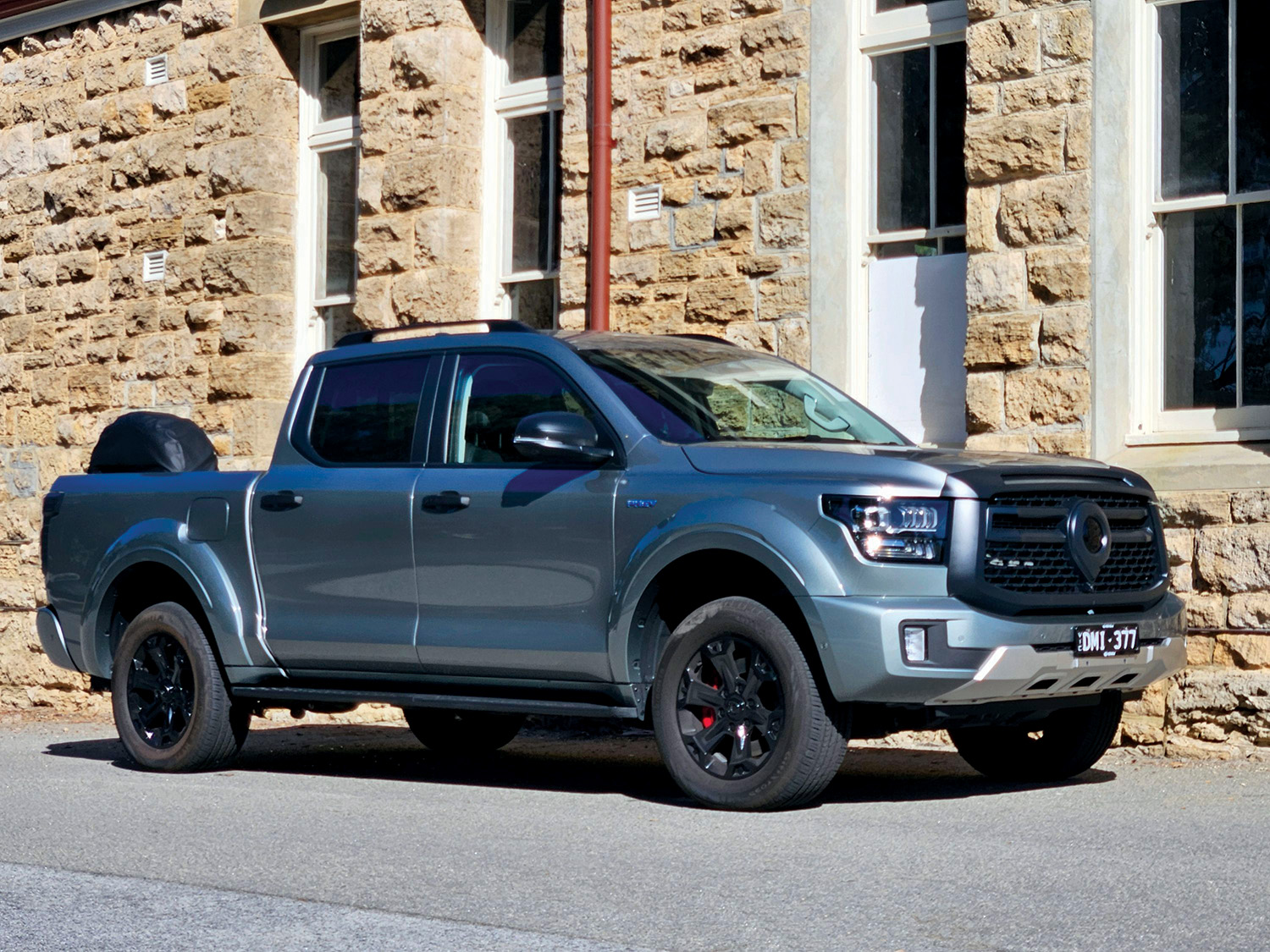
I recently tested the GWM Cannon Alpha Ultra PHEV. Great Wall Motors took on the name GWM a few years ago when the importers felt the brand needed a refresh. A big positive is that GWM has been around for years now, including in Australia, and are unlikely to bail when the going gets tough – unlike a couple of brands imported by new and inexperienced players.
Propulsion of the test Cannon was from a 2-litre petrol motor with hybrid electrical assistance offering quite good performance – through a smooth 9-speed automatic transmission.
This luxury version of the big Cannon is remarkably well-equipped. From heated and cooled front seats and back seats (with massaging at the front) to a panoramic sunroof, phone charger docks back and front, and the “short drop” of the side windows when the door opens, they’ve put every luxury item you can imagine into this ute, mostly electronic.
The rear seats recline (a little) electrically, the tiny rear tray access window opens at the touch of a button, and there are floodlights for the tray area.
The full suite of poorly calibrated safety and warning equipment can be frustrating. Like the overactive driver-attention monitor and lane guidance. For anyone who has bought a new car in the last couple of years that does the same, just so you know, well-sorted designs don’t have these problems.
Too many controls, including cabin temperature, run through the big centre screen. On road, it has the dynamics challenges all similar vehicles share, but it’s not the worst I’ve driven.
Positives include a range of over 1,000km (115km of that electric), 3,500kg braked towing capacity and seven-year warranty. At $65,000, it compares well with the Ford Ranger equivalent at about $20,000 more. For many, this will be a compelling package.