Case study
The case involved a teacher who developed a psychological injury following disciplinary action taken by her employer. The disciplinary process began after an incident involving students in the classroom.
The teacher was subsequently required to attend a disciplinary meeting, the allegations were substantiated, she was placed on a performance improvement plan, and issued with a formal warning.
She attended her general practitioner later that day and did not return to work. While the employer accepted she had suffered a psychological injury, they argued that the injury arose from reasonable management action and therefore should not be compensable.
The Commission disagreed. Although the employer had concerns about the employee’s conduct, it found that the disciplinary process itself fell short of what was reasonable. As a result, the employer was unable to rely on the statutory defence of reasonable management action, and the worker’s psychological injury was found to be compensable.
Three ways to lose a “reasonable” defence
NSW Personal Injury Commission Member Jacqueline Snell identified three flaws in an otherwise carefully planned process – none of these is catastrophic alone, but problematic in combination:
- Notice served: The employee received the allegation letter by email the day before the disciplinary meeting. This provided little opportunity to properly consider the allegations or prepare a meaningful response.
- Unexplained delay: The employer advised that a decision would be communicated by a specified date, but failed to meet its own deadline without explanation. While a delay alone may not be determinative, it formed part of the overall assessment of whether the process had been conducted reasonably.
- Lack of findings: The outcome letter imposed disciplinary consequences and warned of further action, but failed to clearly articulate what allegations had been substantiated and why those findings had been reached.
Individually, these issues may appear relatively minor. Collectively, however, they undermined the employer’s ability to demonstrate that the disciplinary process had been carried out reasonably.
A disciplinary process can come unstuck in any number of other ways – which is precisely why it pays to talk to the professionals before you act, rather than after the claim lands. The AMA (WA) Legal team helps members run fair, defensible processes so that a difficult conversation stays a conversation, not a claim.
How to protect yourself (and your practice)
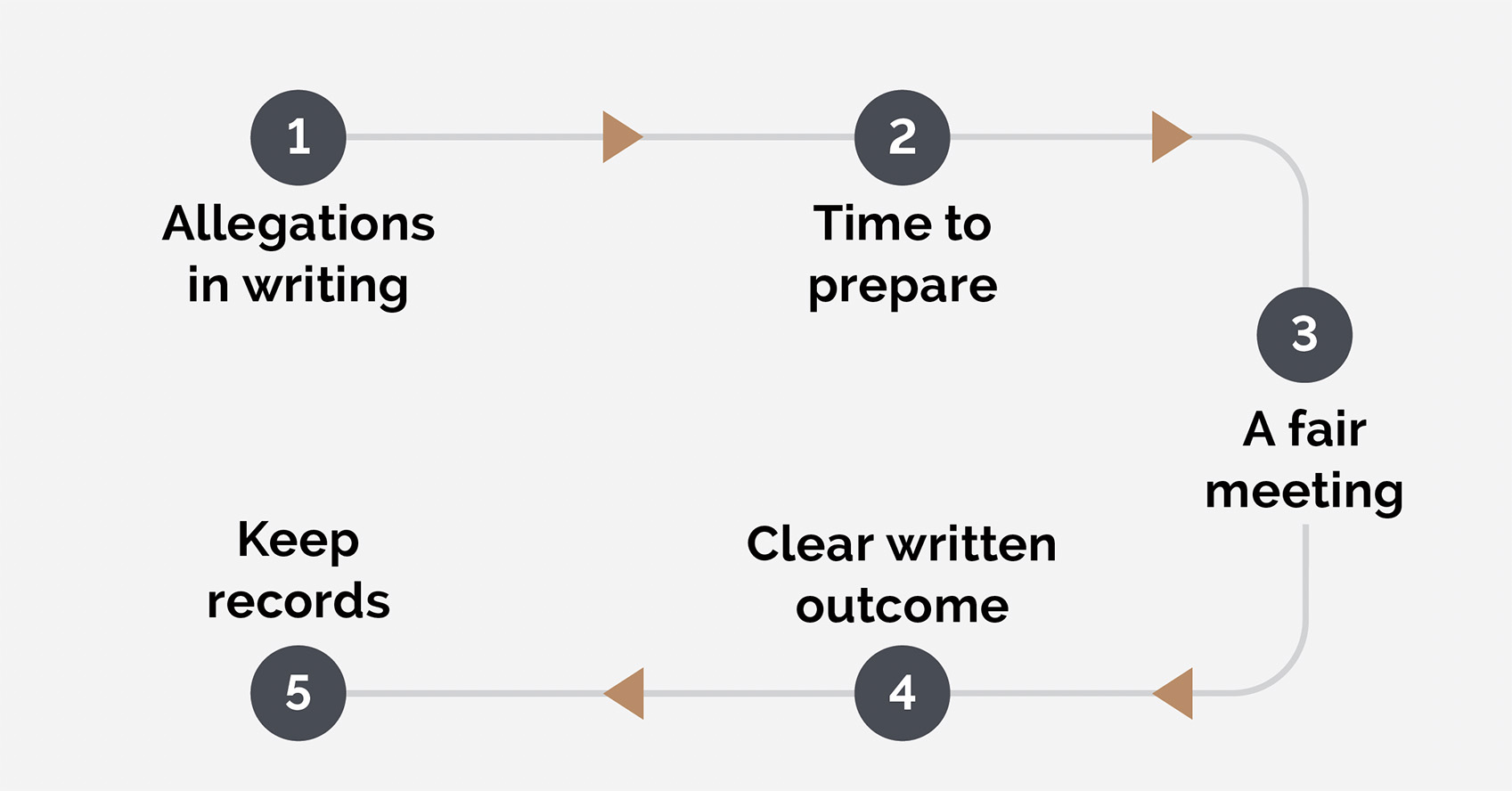
Providing employees with sufficient notice, allowing a genuine opportunity to respond, clearly communicating findings, and maintaining comprehensive records are not merely administrative steps – they are essential safeguards that place employers in the strongest possible position should their decisions later be scrutinised.
The good news is that getting it right is less about legal complexity and more about following a disciplined, well-planned process from beginning to end.