Dr Kyle Hoath

Psychiatrist, AMA (WA) President

Claim EA: Professional Reading CPD hours with AMA CPD Home. Learn more in our helpful article and log your hours.

Content note: This article discusses family and domestic violence.

One of the priorities I set when I stood for president was a stronger focus on the determinants of health and on prevention. Few issues make that case more clearly than family and domestic violence.

Family and domestic violence is, first and foremost, a violation of a person’s safety, dignity and human rights. It is also a major and preventable public health issue. That does not mean medicalising abuse. It means recognising that health policy has an important role in preventing violence, responding safely when it occurs, and supporting
recovery – rather than treating only the injuries and illness left behind.

The scale is stark. In 2024, the Australian Bureau of Statistics recorded 47,045 victims of assault in Western Australia. Of those recorded victims, 30,451 (65%) were associated with family and domestic violence. These are police-recorded figures and do not capture all violence or abuse.

Nationally, the 2021-22 Personal Safety Survey found that 21% of Australian adults, approximately 4.2 million people, had experienced violence, emotional abuse or economic abuse by a partner since the age of 15.

Much of this abuse is not visible to others, reported to police, or safely disclosed. That must never allow it to be dismissed as a private matter.

Responsibility always lies with the person choosing to use violence, abuse or coercive control. It never lies with the person subjected to it. Our response must not be measured by whether a victim-survivor reports the abuse, leaves a relationship, or discloses before they are ready. It must be measured by safety, choice, recovery and accountability.

Family and domestic violence can affect people of any gender, but its burden is not evenly distributed. Women and children are disproportionately affected. An effective response must acknowledge that gendered reality, while remaining inclusive of every person who needs help. It must also be accessible, culturally safe, and capable of meeting the different needs of metropolitan, regional and remote communities.

The health consequences can be serious and long-lasting, affecting physical and mental health, sexual and reproductive health, housing, education, employment, relationships and financial security. Not every victim-survivor will experience the same effects, and no person should be defined by what has happened to them.

In my work in mental health, I regularly see how experiences of violence can affect a person’s wellbeing and recovery. Understanding what is happening at home can be essential to providing appropriate care. Mental illness, alcohol, drugs or life pressures must never be used to explain away or excuse a person’s choice to use violence or control.


The World Health Organization’s LIVES approach – Listen, Inquire, Validate, Enhance Safety, Support – offers a useful foundation for first-line care. Doctors and other health professionals need practical, trauma-informed and culturally responsive training to provide that care confidently.

A health appointment may offer one of the few private opportunities for someone to speak about their safety. But we should not assume that every clinical environment feels safe, or that a person is ready or able to disclose.

When it is clinically appropriate to ask about safety, that conversation must take place privately and sensitively. When someone discloses abuse, our responsibilities are to listen without judgement, take what they say seriously, explain confidentiality and its limits, respect their choices wherever possible, consider immediate safety and, with their consent, help connect them with specialist support.

We must not pressure someone to disclose more than they wish, report the abuse, or leave a relationship. The period around separation can carry heightened risk, and no one outside the situation can fully understand the choices a victim-survivor must make to remain as safe as possible.

The World Health Organization’s LIVES approach – Listen, Inquire, Validate, Enhance Safety, Support – offers a useful foundation for first-line care. Doctors and other health professionals need practical, trauma-informed and culturally responsive training to provide that care confidently.

Policies and screening tools matter, but they must be backed by private consultation spaces, clear referral pathways, specialist social workers, crisis teams and strong relationships with community services. Individual clinicians cannot and should not be expected to navigate this alone.

Safe housing is also health infrastructure.

For some victim-survivors, the safest option may be crisis or transitional accommodation. For others, programs that help them remain safely in their own home, or a home of their choice, may be more appropriate. The central principle must be choice, supported by expert risk assessment and safety planning.

Demand for safe accommodation continues to exceed capacity in parts of Western Australia. An emergency department cannot substitute for a safe home. We need sufficient refuges and transitional housing, alongside outreach services and programs that enable people to stay safely connected to their communities, workplaces, schools and support networks.

A Western Australian linked-data study found that children whose exposure to family and domestic violence was identified in police records had a 49% higher adjusted risk of contact with mental health services than children in the comparison group.

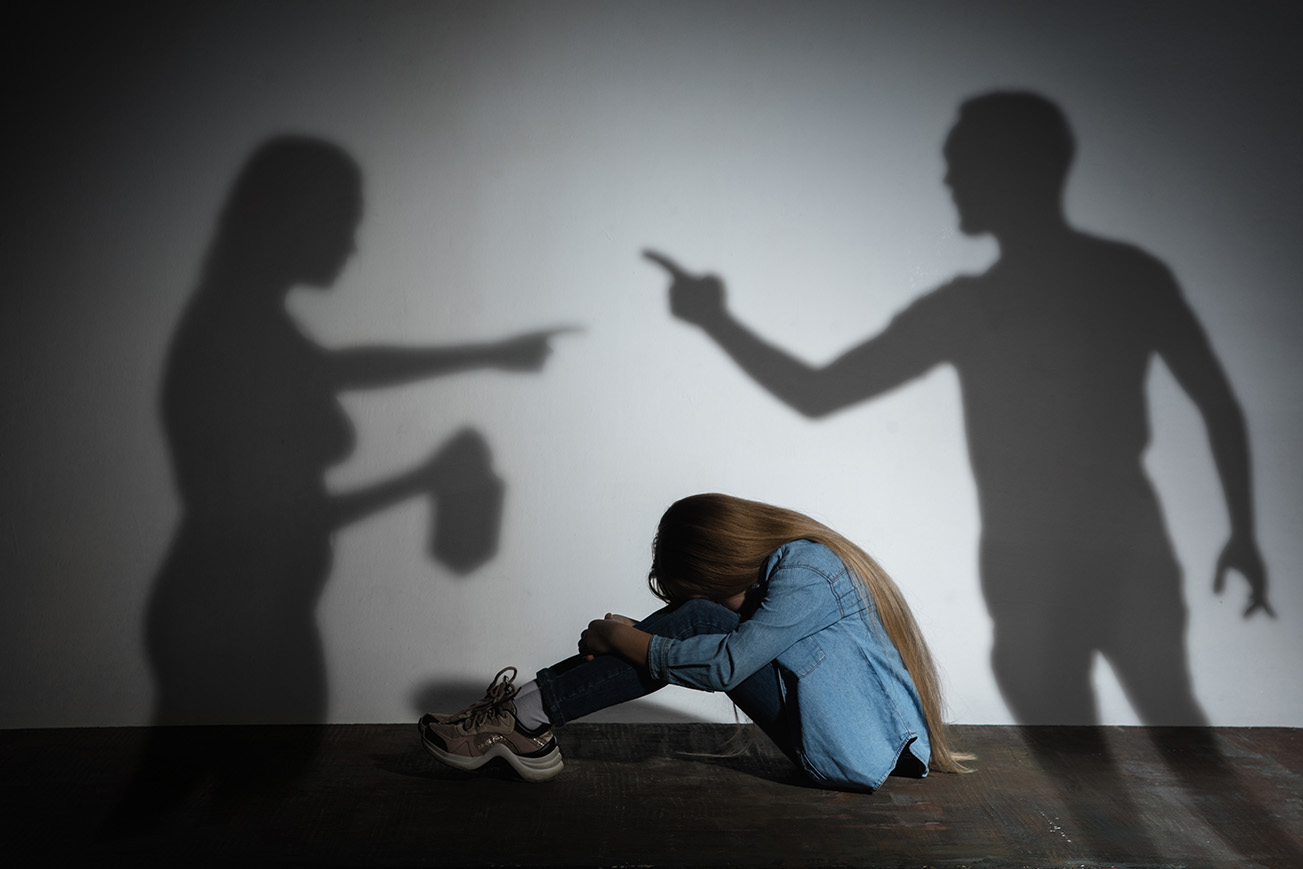
Children who live with family violence are not passive witnesses. They experience its fear, control and instability and must be recognised as victim-survivors in their own right, whether or not violence is directed at them personally.

A Western Australian linked-data study found that children whose exposure to family and domestic violence was identified in police records had a 49% higher adjusted risk of contact with mental health services than children in the comparison group.

That is a population-level association, not a prediction for any individual child.

Harm is not inevitable. With safety, stability and timely, culturally appropriate support, children can recover and thrive. Their needs and voices must be incorporated into risk assessment, service design, therapeutic care, and decisions affecting their lives.

We also need to distinguish primary prevention from the essential work of crisis response and recovery.

Primary prevention means acting before violence occurs. It includes age-appropriate, respectful-relationships education; advancing gender equality; challenging attitudes and behaviours that normalise disrespect and coercion; engaging men and boys as active partners in prevention; and supporting culturally informed, community-led programs.

Public education campaigns can help people recognise abuse, challenge harmful behaviour, and find support. But encouraging disclosure must never become an end in itself. No one should be expected to tell their story before they are ready, or in circumstances where doing so may place them at greater risk.

At the same time, prevention must sit alongside early intervention, specialist services and evidence-based programs that hold people using violence accountable and support them to change their behaviour.

I want to place on the record my unreserved appreciation and sincere thanks to the Hon Jessica Stojkovski MLA, Minister for Prevention of Family and Domestic Violence. She deserves unequivocal praise for the urgency, compassion and practical focus she has brought to this portfolio.

Under Minister Stojkovski’s leadership, the State has backed awareness with concrete, system-wide action. The 2026-27 State Budget commits an additional $106.3 million over the forward estimates to family and domestic violence prevention and response.

Prevention is both a moral necessity and sound public health policy. But its value cannot be measured only in hospital presentations avoided or dollars saved. It must also be measured in safety restored, childhoods protected, dignity respected, and lives lived free from fear and control.

That work includes a $13.7 million investment through WA Health over three years to strengthen the health system’s capability, including out-of-hours social workers in emergency departments, service navigation, and stronger specialist counselling.

It also includes additional crisis accommodation; the expansion of Safe at Home from 11 to 19 locations; new tailored support for young people affected by violence; and $6 million for community-led primary-prevention initiatives.

I am deeply grateful to Minister Stojkovski for keeping safety, recovery, choice and perpetrator accountability at the centre of this work. Her leadership deserves the active support of every government portfolio, the health profession, and the wider community.

The annual 16 Days in WA campaign, running from 25 November to 10 December, remains an important opportunity to raise awareness and encourage action. But this work cannot be confined to 16 days. It must be a commitment for every day of the year.

This is not a choice between hospitals and prevention. A capable health system must do both: respond compassionately when harm occurs and invest upstream in preventing violence, safe housing, specialist services, respectful relationships and perpetrator accountability.

Prevention is both a moral necessity and sound public health policy. But its value cannot be measured only in hospital presentations avoided or dollars saved. It must also be measured in safety restored, childhoods protected, dignity respected, and lives lived free from fear and control.

The health system cannot end family and domestic violence alone. But it cannot stand apart from the effort. Ending this violence must be one of our most significant and sustained preventative health priorities.

If this article raises concerns for you or someone you know, support is available.

In an emergency, call 000. For confidential support available 24 hours a day, contact 1800RESPECT on 1800 737 732, send a text message to 0458 737 732 or visit 1800RESPECT.org.au.

If your phone or device may be monitored, consider using a safer device or contact method where possible.

Start typing and press Enter to search