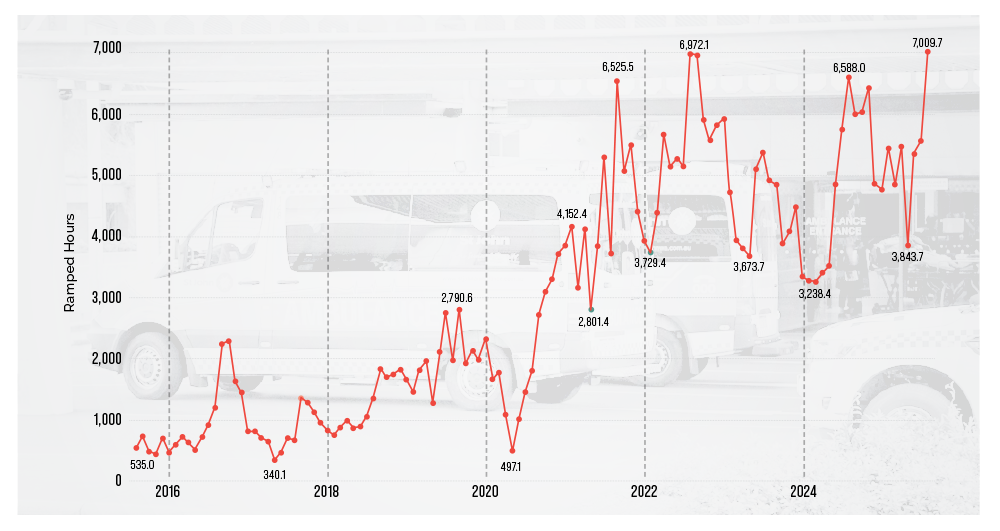
Ambulance ramping in July reached the highest level ever recorded by St John for the metric. With almost 7,010 hours recorded, it exceeded the 6,972 hours in July 2022, with July traditionally the worst or one of the worst months due to an increase in respiratory illness.
AMA (WA) President Dr Kyle Hoath said it was an unwanted record but predictable, nevertheless.
“We’re not surprised. We’ve seen this coming. We’ve been warning this will happen,” he said.
“We know what the problem is. We need more beds. It doesn’t matter with what level of complexity we look at it, and it doesn’t matter what way we try to understand this. We are at capacity.
“We don’t have the beds to manage people coming into our health sector. It’s our loved ones, our friends, our family, spending 7,000 hours waiting. Waiting to get through the front door of the emergency department. That’s not OK.”
Dr Hoath explained what this meant in practical terms for the community.
“Seven thousand hours of ramping is 7,000 hours where ambulances are sitting with patients inside them waiting to get into an emergency department,” he said.
“So, the ambulances aren’t on the road helping other people, and those patients aren’t getting through the front door of the emergency department without a 7,000-hour wait across the month, so that’s delay in getting care.”
WA Health Director-General Dr Shirley Bowen acknowledged that a high volume of complex patient presentations had contributed to pressure on WA’s public hospitals this winter.
“My priority remains providing safe care for our patients, and WA Health’s workforce is working hard to achieve this. I am proud of our healthcare workers, and I thank them,” she said.
Dr Bowen said that critically ill patients would always be prioritised.
“Ambulance ramping is one of the most visible challenges facing our health system and those around the nation, and we take it very seriously,” she said.
“There is no ‘one cause’; there are many factors which contribute to demand, including high levels of winter respiratory illness, and issues such as road trauma, mental health and drug-related presentations.”