Claim EA: Professional Reading CPD hours with AMA CPD Home. Learn more in our helpful article and log your hours.
Obstetrics Consent

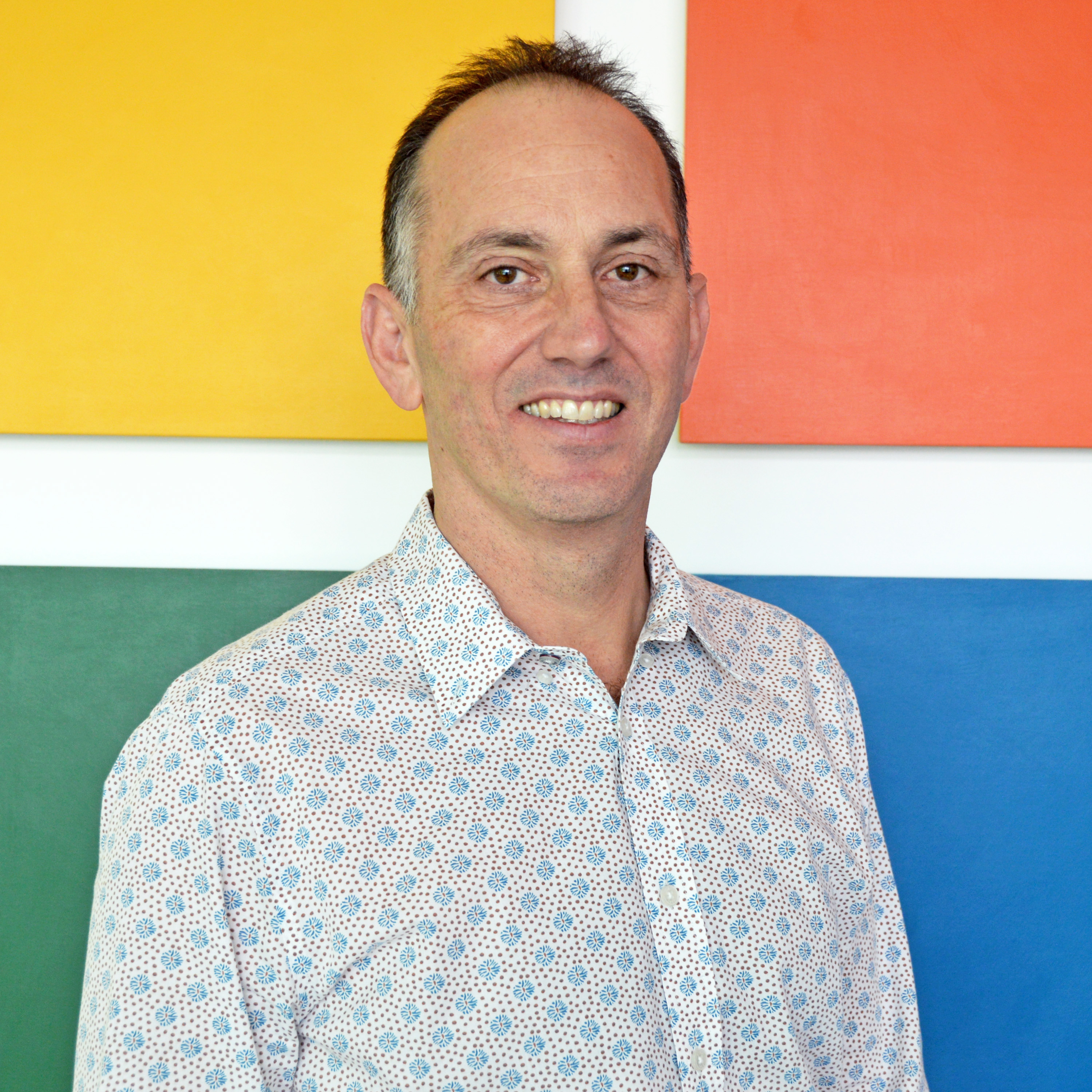
Dr Andrew Martin, Consultant Paediatrician

Paediatricians are pushing for a universal childhood screening program to help detect and manage the estimated 20,000 children with inherited high cholesterol across Australia, to prevent their risk of future heart disease.

Children with familial hypercholesterolaemia, known as FH, are born with very high levels of low-density lipoprotein (LDL), or “bad” cholesterol. The common genetic condition, affecting one in every 250 of the general population, predisposes affected individuals to cardiovascular disease (CVD) in early adult life.

Untreated, 50% of men and 20% of women with FH will suffer a fatal or non-fatal coronary event by age 50. However, when diagnosed and managed from childhood, future CVD is completely preventable and individuals can expect a normal life expectancy, emphasising the importance of early detection and management.

Consultant paediatrician Dr Andrew Martin, the medical lead at Perth Children’s Hospital (PCH) paediatric Centre for High Impact Lipid Disorders (CHILD), says the case for universal screening for FH is gaining traction nationally and internationally, supported by over three decades of evidence demonstrating that early detection and treatment prevent premature CVD.

“There is a real push across the world to try and change the narrative, so we think about FH and other high-impact inherited lipid disorders as treatable paediatric conditions, allowing us to focus on maintaining the heart health of these children,” Dr Martin explains.

“We can manage FH very effectively if it is diagnosed in childhood, as opposed to the current situation where adults with FH are identified for the first time in a coronary care unit with established CVD, after having suffered a heart attack, requiring coronary artery stents or bypass surgery.

“Diagnosing and managing inherited high cholesterol from childhood is true prevention, and it means we can stop history repeating itself generation after generation for families with FH.”

Dr Martin says the most effective way to screen for FH is in childhood, with various options being considered nationally. Screening children with a total or LDL-cholesterol level between the ages of one and nine best discriminates between those with and without FH in the general population.

“We performed a WA pilot study in 2018 to 2020, funded by the PCH Foundation and Telethon, where we screened children aged 12 to 18 months for FH at the time of an immunisation, with a point-of-care cholesterol test.

“We screened 448 children and diagnosed three with FH. Importantly, with reverse cascade testing, each child with FH led to the detection of previously unaware family members with FH, resulting in an additional five adult relatives who were at more imminent risk of an acute coronary event being diagnosed and able to start treatment without delay.


FH is one of the most common and serious genetic disorders in childhood, yet remains profoundly underdiagnosed and undertreated in Australia.

“Our universal screening approach to detect FH in childhood was not only feasible, but also acceptable, with 90% of families reporting they would choose to screen their next child, and it is highly cost-effective.”

Dr Martin says a national universal childhood FH screening program remains a key advocacy priority, but there is much GPs can do now to improve the detection of children with FH. CHILD is encouraging GPs to think about screening for FH as part of any routine blood tests, and to follow up with cascade screening of the extended family if the initial results proved positive.

“If a child is having a blood test for any reason, there is an opportunity to add on a non-fasting lipid profile, especially if there is a family history of high cholesterol or premature CVD,” he says.

“This is a simple step with the potential not only to identify a child with FH who can commence management to prevent future CVD, but with reverse cascade testing to diagnose their affected parent with FH and other family members.”

A clinical diagnosis of probable FH can be made in a child with a non-fasting LDL-cholesterol >5 mmol/L, or LDL-cholesterol >4 mmol/L, if there is a parental history of hypercholesterolaemia or premature CVD. Children with probable FH should be referred to the PCH lipid clinic for confirmatory genetic testing and to plan management.

Once an individual is found to have a pathogenic FH variant, GPs can request genetic cascade testing of any first- or second-degree relatives, using MBS Item 73353. CHILD will support cascade testing of any first or second degree relatives of an FH proband under 18.

Once the FH diagnosis is confirmed in a child, management is relatively straightforward and highly effective. A heart-healthy lifestyle should be introduced, with a diet low in saturated and trans-fats, encouraging physical activity and maintaining a healthy body weight.

LDL-cholesterol goals for children are less stringent than for adults: <4 mmol/L for children under 10 years and <3.5 mmol/L for children aged 10-18. This can be achieved in most children with lipid-lowering medication, most often a low-dose statin, which is well tolerated and has an excellent long-term safety profile in childhood.

Despite major advances in knowledge of FH, and national and international guidelines, Dr Martin says FH remains largely undetected and untreated worldwide, with more than 90% of adults and 95% of children unaware they have the condition.

FH is a treatable paediatric disorder. With diagnosis and management from childhood, future cardiovascular disease is entirely preventable and a normal life expectancy is achievable.

In response to this persistent under-detection of FH in the general population, the 2022 Prague Declaration was a call to action, endorsed by European national governments and policymakers, to commit to implementing FH universal childhood screening – this has been commenced by several European countries including Slovenia, Germany and Luxembourg.

Dr Martin says a PCH Foundation-funded, three-year program, ‘FH in Kids’, has helped increase the detection of children with FH in WA. Working in collaboration with the adult tertiary hospitals and GPs, FH in Kids supported the co-ordinated cascade testing of children under 18, and has demonstrated a three-fold increase in rates of FH detection over the first two years of the program.

“There were adults who had been diagnosed with FH, but cascade testing of their children or grandchildren had not occurred,” he says. “FH in Kids helped us achieve that, but having screened through all of these patients, we are now left waiting for adults to present with a clinical event before their children can be screened.”

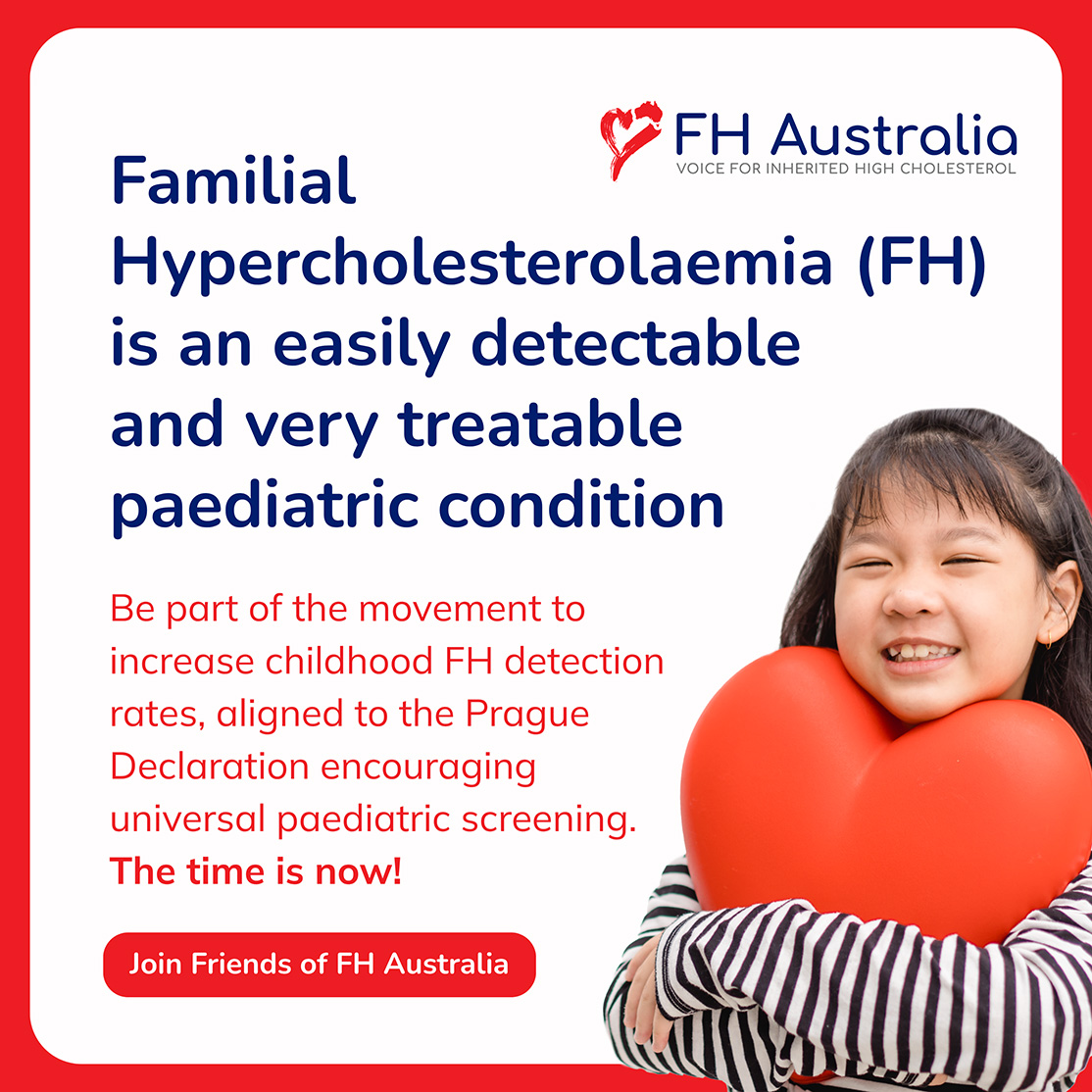
FH Australia, the consumer-led national voice for inherited high cholesterol, has called for Australia to follow Europe’s lead and establish a universal childhood screening program for FH. Founded in 2023 by three Western Australians with a lived FH experience, FH Australia was established to raise awareness about this common inherited condition, to support individuals and families, and to advocate for solutions to the healthcare gaps that contribute to persistently low detection rates.

FH FACTS

  • Familial hypercholesterolaemia (FH) is inherited in an autosomal dominant manner, meaning that if a parent is affected, each child has a 50% chance of also inheriting the condition.
  • The prevalence of FH is about 1 in 250 people, with an estimated 10,000 individuals affected in WA, of whom 2,000 are children under 16 years. There are three children born with FH every week in Western Australia.
  • FH Australia, the consumer-led national voice for inherited high cholesterol, has called for Australia to follow Europe’s lead and establish a universal childhood screening program for FH.
  • FH in Kids, a PCH Foundation-funded three-year program, has demonstrated a three-fold increase in rates of FH detection over the first two years of the program.
  • The paediatric Centre for High Impact Lipid Disorders (CHILD) at Perth Children’s Hospital is the first of its kind in Australia, funded by a $3.2 million, five-year grant from the Stan Perron Charitable Foundation.
The evidence base for childhood detection, treatment and follow-up is robust. What is required now is the will from individual clinicians, health systems and government to find these children and treat them.”

“FH Australia is a key partner for CHILD, and we are incredibly lucky to have their leadership group based here in WA”, Dr Martin says.

CHILD, established in July 2025 with a $3.2 million, five-year grant from the Stan Perron Charitable Foundation, is helping to provide world-class clinical care to children and adolescents with FH and other high-impact lipid disorders.

CHILD is the first of its kind in Australia, providing a multifunctional, multidisciplinary, cross-sector hub caring for children with FH, elevated Lp(a) and severe hypertriglyceridaemia in WA.

Dr Martin says FH is one of the most common and serious genetic disorders in childhood, yet it remains profoundly underdiagnosed and undertreated in Australia.

Three children are born with FH in Australia every day, and without a universal childhood screening program the overwhelming majority will not be diagnosed until they have already accumulated years of preventable CVD risk or, in too many cases, until a parent or they themselves suffer a premature CV event.

“Safe, effective and well-tolerated treatments are available. The evidence base for childhood detection, treatment and follow-up is robust. What is required now is the will from individual clinicians, health systems and government to find these children and treat them.”

Start typing and press Enter to search