The first PET/CT scanner in Western Australia was installed at Sir Charles Gairdner Hospital (SCGH) in 2002, when I was a fourth-year medical student. This was a major milestone in medical imaging and, at the time, it was one of only a few hybrid PET/CT systems in Australia.
In 2003, the WA PET cyclotron service became fully self-sufficient in producing short-lived radioisotopes locally (rather than procuring them interstate), providing the foundation for a sustainable PET/CT service.
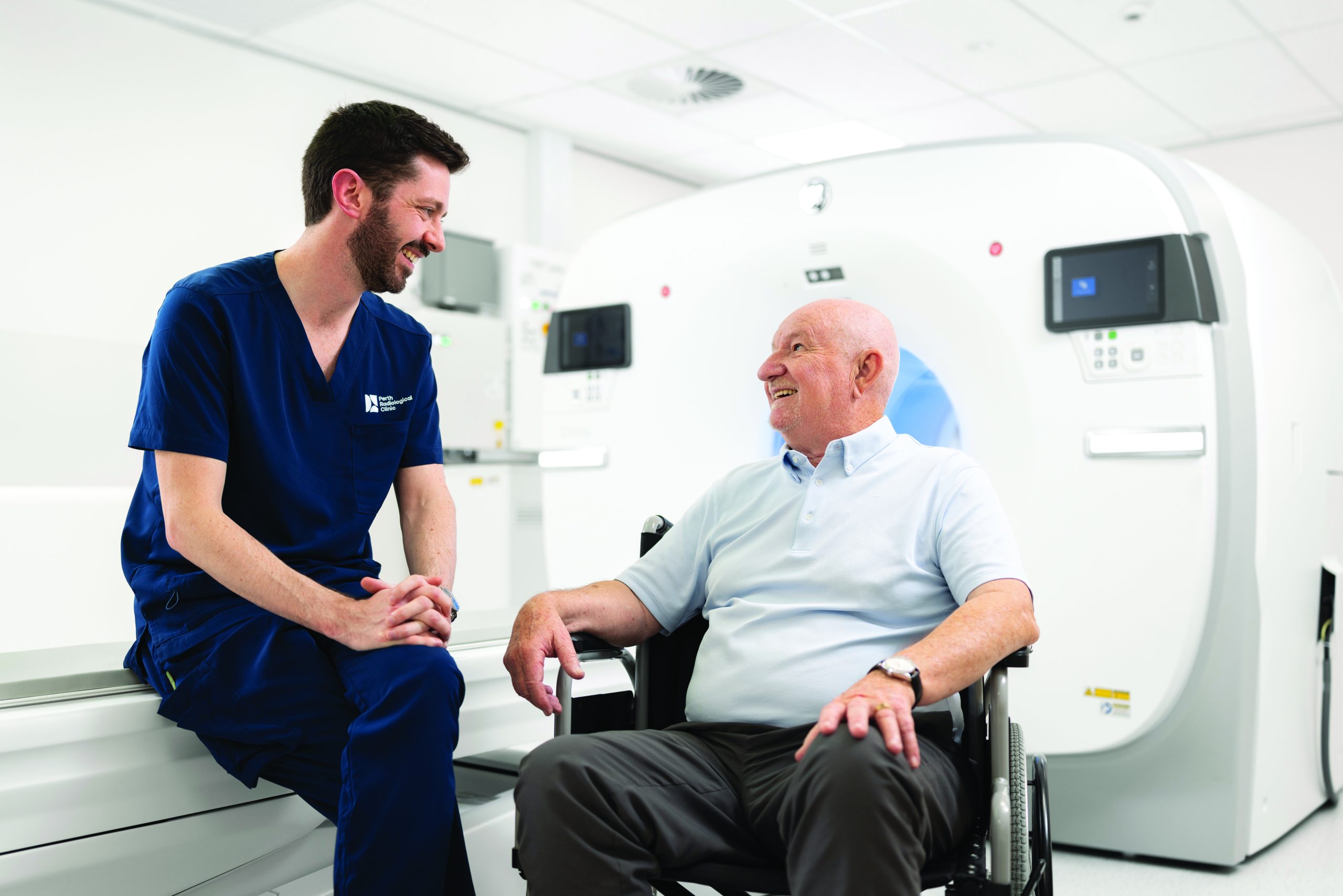
Designed with patient comfort in mind, PRC’s PET/CT facilities combine advanced imaging technology with accessible care.
Initially, Medicare rebates for PET were tightly restricted to a small number of accredited scanners nationally, mainly in tertiary hospitals, with only the one eligible scanner in WA. As evidence of the clinical value of PET/CT grew, and as it became increasingly embedded in diagnostic, staging and treatment pathways for a wider range of solid organ malignancies and lymphomas, MBS eligibility was extended to private providers able to meet stringent credentialing standards for their equipment, and nuclear medicine specialists.
A significant milestone came in 2015, when Perth Radiological Clinic (PRC) acquired OMI and became the first practice in WA to offer clinical PSMA PET/CT for prostate cancer and amyloid PET/CT for Alzheimer’s disease at Hollywood Hospital. These developments demonstrated the rapid evolution of PET to encompass novel tracers and applications beyond conventional cancer imaging.
In the same year, the Australian Cancer Research Foundation Preclinical Imaging Facility opened at the Harry Perkins Institute of Medical Research, providing access to preclinical small-animal PET/CT, SPECT/CT and MRI. This strengthened WA’s capacity to translate imaging research from the laboratory into clinical applications. I was fortunate to become the inaugural Fellow in Translational Imaging, sponsored by PRC, in 2016.
In 2022, supply-chain challenges surrounding Ga-67 contributed to the creation of a specific MBS item for whole-body imaging of inflammation or infection in appropriate patients. In clinical scenarios such as pyrexia of unknown origin, FDG PET/CT has become an invaluable tool to identify sites of occult infection, malignancy and inflammatory disease including large-vessel vasculitis.