From the city to the Kimberley to the Goldfields, we have identified doctors, both Indigenous and non-Indigenous, engaged in various ways to improve the health of Indigenous communities: saving their eyesight; protecting them from unsafe drinking water; and looking after their sexual health.
Aboriginal people are being involved in the process, and their knowledge, perspectives and lived experience are helping to shape how health programs are designed and delivered.

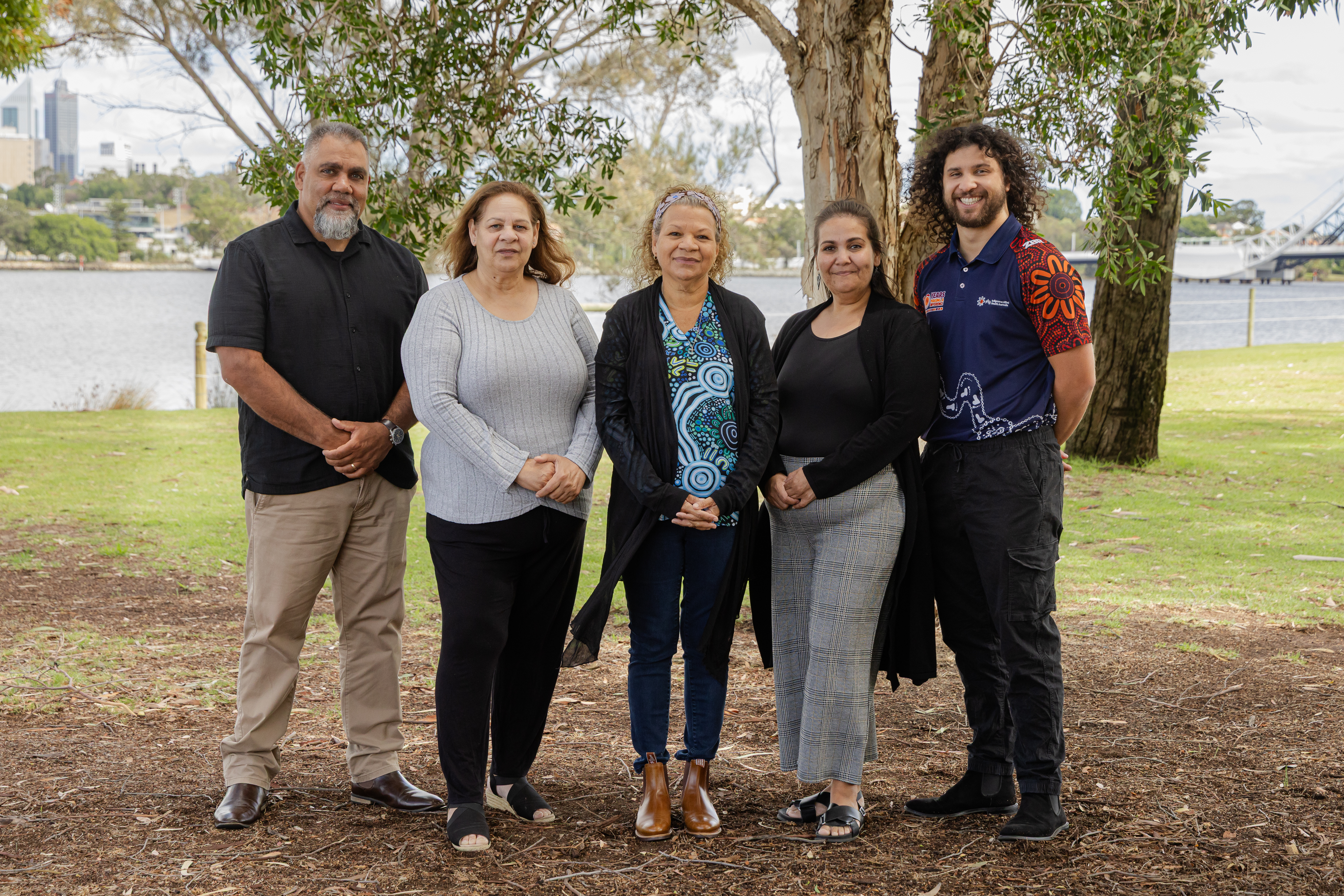
Committee members: Stephen Morrison, Dr Christine Clinch,
Dr Stephanie Trust, Jessica Curnuck and Mitchell Walley.
Rural Health West has set up a special advisory committee to ensure Aboriginal voices help to shape the organisation’s efforts to improve Indigenous health outcomes across the State.
The newly established Aboriginal Advisory Committee will provide cultural expertise and strategic advice to the Rural Health West Board and staff to ensure ongoing programs and future initiatives are informed by Aboriginal knowledge, perspectives, and lived experience.
The seven-member committee, which will meet four times a year, held its first meeting in Perth on 13 March. The inaugural chair of the committee is Dr Stephanie Trust – a Gidja and Walmajarri woman – who is clinical director of the Wunan Health and Well-Being Centre in Kununurra. The other members, who come from all over WA, are Dr Christine Clinch, Ashley Councillor, Jessica Curnuck, Adjunct Professor Tuguy Esgin, Stephen Morrison and Mitchell Walley.
Dr Trust says the advisory group provides an opportunity for Aboriginal perspectives to shape how Rural Health West’s programs and services are designed and delivered.
“Aboriginal people understand the realities our communities face and the importance of care that respects culture, connection and community,” she says.
“We need Aboriginal voices influencing every part of the health system – from the way services are delivered to how programs are designed and decisions are made.
“This committee creates a space for that influence. It allows Aboriginal leaders to share their knowledge and lived experience, so that Rural Health West can work in ways that genuinely support our communities.”
Dr Trust, a former member of the Rural Health West Board, says strengthening Aboriginal leadership in health is critical to creating sustainable change in rural and remote Australia.
“ Closing the gap in health cannot be achieved without genuine partnership with Aboriginal peoples. For Rural Health West, this means ensuring Aboriginal voices help guide our priorities, our programs, and the way we work with communities.
“Our communities have the knowledge and the capability to shape solutions,” she says. “When Aboriginal people are part of the leadership and decision-making, it strengthens the whole system and helps ensure the services being delivered truly meet community needs.”
Improving health outcomes for Aboriginal peoples is a key part of Rural Health West’s mission.
The organisation delivers a range of programs that prioritise Aboriginal communities, including outreach services delivered specifically for Indigenous patients, recruitment and locum support for Aboriginal Community-Controlled Health Organisations, and the annual Aboriginal Health Conference.
Rural Health West CEO Professor Catherine Elliott said the establishment of the committee represents an important step in informing the organisation’s work at every level to support culturally appropriate services and improve health outcomes.
“Closing the gap in health between Aboriginal and non-Aboriginal people cannot be achieved without genuine partnership with Aboriginal peoples,” Professor Elliott says.
“For Rural Health West, this means more than consultation. It means ensuring Aboriginal voices help guide our priorities, our programs, and the way we work with communities.
“Aboriginal self-determination and leadership are a critical step in reconciliation, and partnering with Aboriginal peoples and organisations is a priority for Rural Health West.
“The Aboriginal Advisory Committee will play an important role in establishing and strengthening those partnerships and ensuring our work is informed by cultural knowledge, lived experience, and community leadership.”
You're just getting to the good part! Log in to your AMA (WA) member account to continue reading, or join today for full access to exclusive content, member benefits, and more.
Month End Offer is live!
Get up to 40% off on AMAMedius
Sign in using your membership email and date of birth.