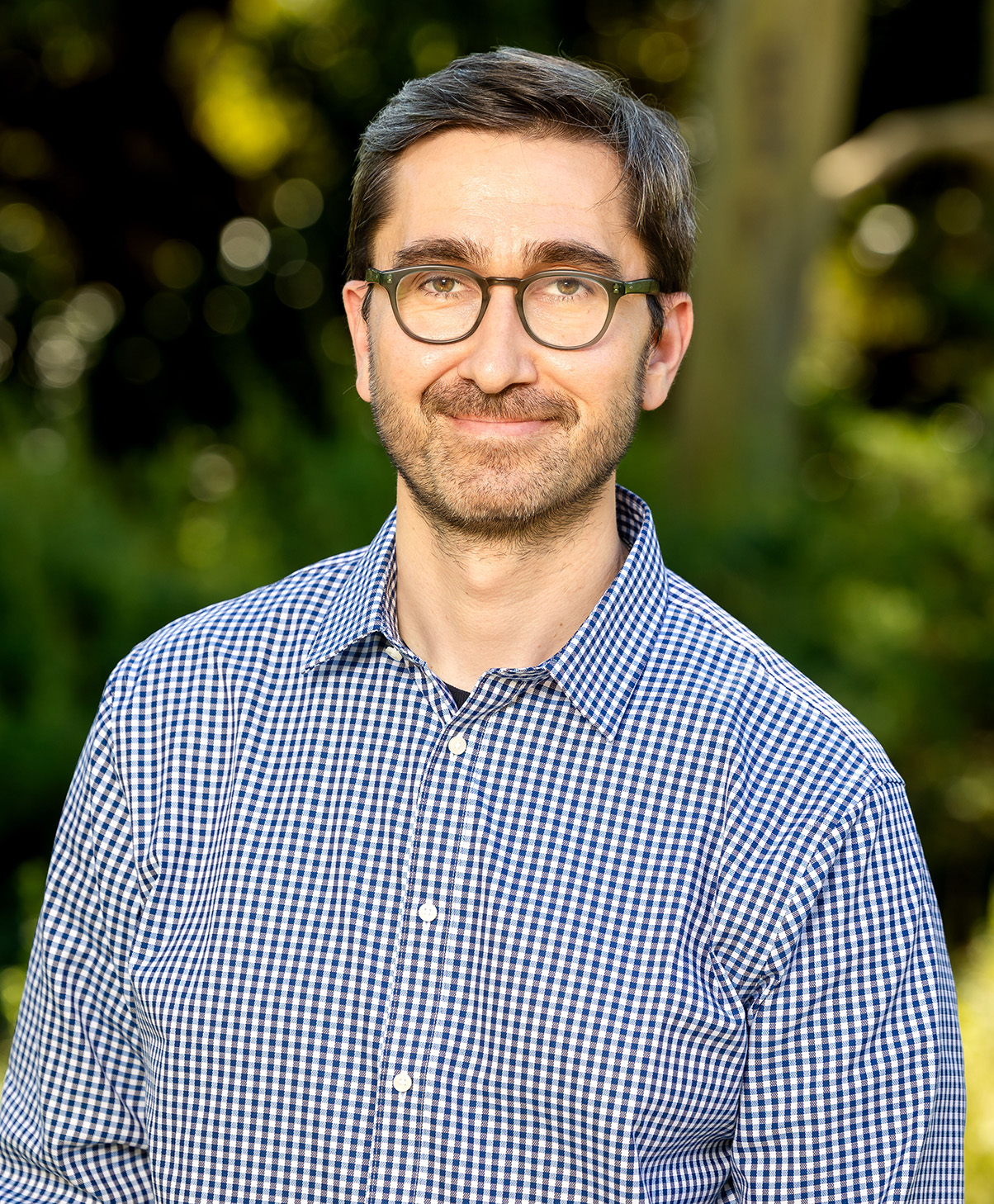
Medically trained researcher Mirko Uljarevic cites Hippocrates when explaining the disconnect between making a clinical diagnosis of autism and determining the most effective treatment and support in each case.
“What we know is that the specific diagnostic labels – be it autism, be it ADHD, or any other neurodevelopmental, neuropsychiatric designation – provide very limited information in terms of predicting how well the child will do,” Professor Uljarevic explains.
“Just because someone has a diagnosis of autism or ADHD, at the point of diagnosis it’s quite difficult to predict the outcomes for the child, what supports they need, and how well they’ll respond to specific supports.
“So, it’s kind of quite ironic that Hippocrates basically said the point of diagnosis is prognosis. It’s been a few years since the ancient Greeks, but as a field we haven’t done particularly well!
“Luckily, the research we’ve done, the research our colleagues have done, and the research from others has shown that, irrespective of the diagnosis, there are specific clinical, cognitive and developmental domains or behaviours or traits that – if captured well – can be very useful in understanding the profile of strengths and areas of need for each child and family, and then be linked to specific support the child should receive.”
Using international and local ‘big data’ sets, Prof Uljarevic’s project team has developed a computerised adaptive assessment tool to map each autistic child’s unique strengths and needs, and match them with the most effective, evidence-based clinical support.
Prof Uljarevic, a global leader in autism research, has relocated to Perth to run a $3.4 million project, funded by a Future Health Research and Innovation Fund Distinguished Fellowship grant and more than $1 million from the Stan Perron Charitable Foundation, to improve the accuracy and effectiveness of autism screening, diagnosis and care in WA. He is based at The Kids Research Institute and The University of Western Australia.
“People who have a diagnosis of autism differ hugely, not only in terms of what we call core autism features – social and communication difficulties, and restricted and repetitive behaviours – but also in terms of other clinical associated features. For example, anxiety, depression, ADHD, and other clinical phenotypes. It’s an incredibly heterogeneous condition,” Prof Uljarevic explains.
“They also have varied outcomes and crucially different support needs, just given that kind of huge individual differences among them. And what’s also really important is they respond differently to the same or identical intervention. You might have two kids with the same diagnosis, receiving specific behavioural intervention; one might respond really well and one might not respond at all. So, it’s not only that they have different support needs, but they also respond differently to the same treatments.
“So, to understand what contributes to these individual differences and, most importantly and relatedly, to understand what supports are most suitable to a given person, a given child or a given family, we need large, enriched clinical data sets – information that will be essential for improving both clinical research and practice.”
Because of the limitations of a ‘one-size-fits-all’ diagnostic approach, alternatives have been put forward, including the US National Institute of Mental Health’s Research Domain Criteria and Hierarchical Taxonomy of Psychopathology.
“These dimensional frameworks were developed specifically to address the limitations of the current diagnostic systems,” Prof Uljarevic explains.
“The assessment protocol that we are currently in the process of validating with 3,500 kids and families was specifically developed to assess and quantify those clinical, cognitive and developmental domains that are essential for understanding the profile of each child.
“The way it works is our tool can help inform the diagnosis – like this child has these particular social difficulties; these particular repetitive behaviours – but it goes beyond that. It captures, for instance, how well this child can recognise someone’s emotions; how well they can empathise with someone; how well they can put themselves in someone else’s shoes; how good they are at regulating their emotions.
“Those are all the building blocks of healthy functioning and our ability to navigate the complexities of the world, but the current assessments don’t really capture those.”
Prof Uljarevic says the assessment tool will provide a detailed report for clinicians, with a full profile of a child’s clinical cognitive developmental characteristics, and that will support the development of a personalised care program for the child and the family.
“The other feature of the assessment is that it actually enables clinicians to track improvements over time,” he says.
“We’re developing what we call regression-based change norms, so we can quantify whether the change we are seeing at the level of each child is significant and clinically meaningful or not. It will have a graphic type of output for the clinician so they can see a chart – like now, then in three months and six months, showing how scores of the child change over time. That’s quite a unique feature. Most of the instruments don’t really provide that.
“You might have two kids with the same autism diagnosis, receiving specific behavioural intervention; one might respond really well and one might not respond at all. So, it’s not only that they have different support needs, but they also respond differently to the same treatments.
“Once the instrument is fully developed, fully validated and fully tested, it wouldn’t rely on our team at all. It basically will be a clinical decision-support tool. There will be a system where the clinician can just send a survey link to the families for them to complete.
“Based on those norms we’re developing, all the statistics, it would calculate the scores from all these different domains. Clinicians would immediately be able to access really detailed reports to say this child most likely has autism, and it would provide clinicians with detailed information in terms of the support needs. And once they start implementing treatment, they will be able to send the assessment link to the family and see whether they’re improving, as one is hoping.”
The five-year research project is being conducted in consultation and collaboration with a consumer reference group, convened on a regular basis.
“Obviously, the group includes people with lived experience of autism, so family members and kids or adolescents; but it also involves clinicians and policymakers,” Prof Uljarevic says. “So, we are getting input from all different stakeholders throughout the lifespan of the project.”
Serbian-born Prof Uljarevic, who has worked in the UK, La Trobe University in Melbourne, and most recently at Stanford University’s Department of Psychiatry and Behavioural Sciences in California, has brought with him two Australian post-doc research colleagues from the US to work on the Perth project – Dr Lacey Chetcuti and Dr Emily Spackman – whom he knows from his time in Victoria.